
Thirty years ago I witnessed a French football fan at half-time in the bar at FC Auxerre, rejecting a wine as corked and receiving a replacement glass. It made a big impression, and struck me at the time as something unimaginable in England. I’ve never forgotten it. The wine in question wasn’t Chablis, it was a Bourgogne Irancy, but the complaint was accepted, a new bottle opened, tasted by the server behind the bar and the replacement glass handed over.
I was delighted to learn that Tommy Chevallier, whom we introduce here, is a keen FC Auxerre supporter, and a regular at home games with his young son, Léonard. Hopefully, without the TCA problem, I’ll get to relive the experience at a home game soon with them.
My quest for Chablis has become an office joke. I have visited 4 times in the last 15 months and tasted a lot of wines. It’s a pretty area, and the notion of terroir is alive and well here: Climate, soil, and tradition coming together to make wines which genuinely are unique. As a general observation, for such a famously-named village, I feel a lot of producers lack the ambition to produce something sensational. I dare to say, even in this troubled economic moment, when we’re cutting prices everywhere, that Chablis, much of it, is too cheap.
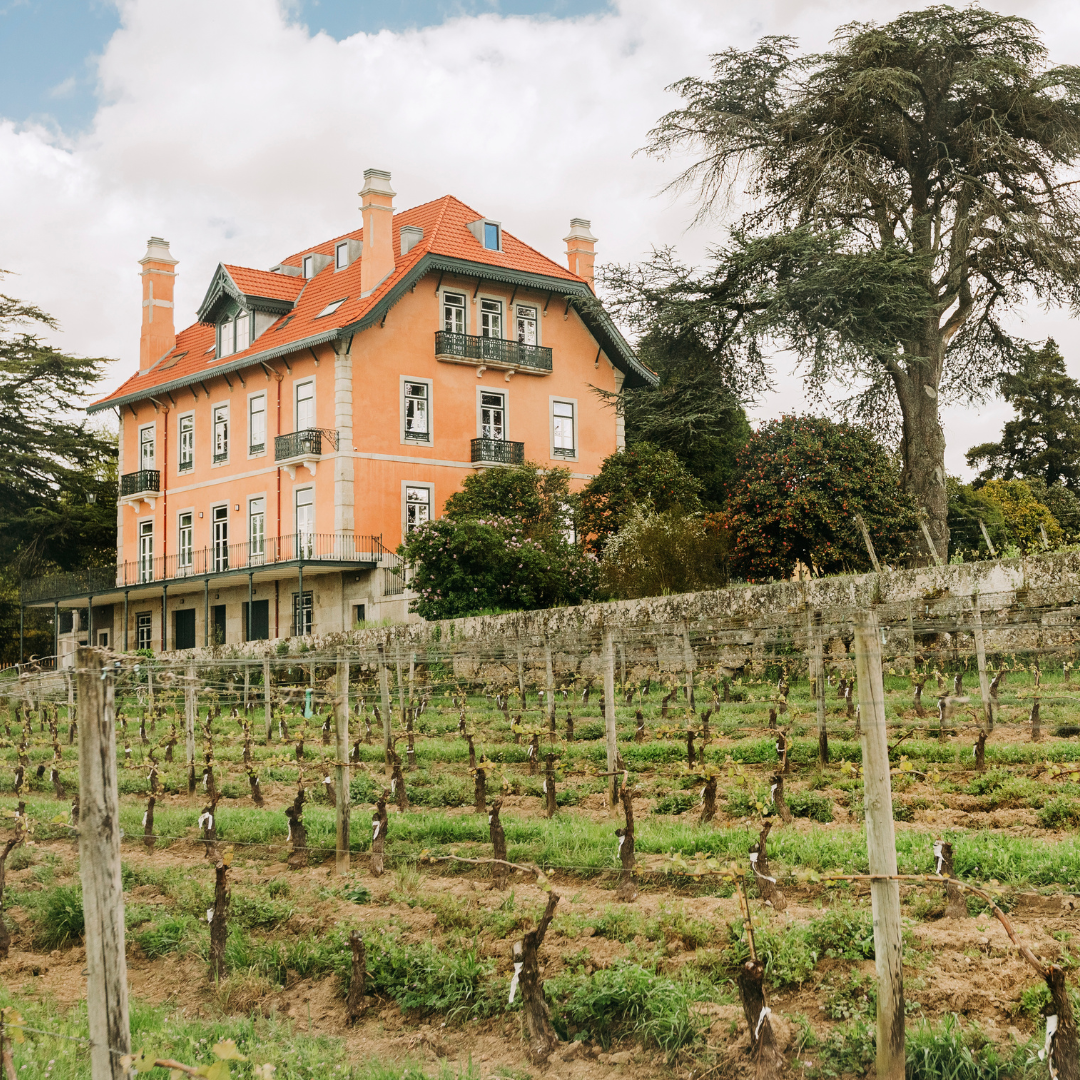
Tommy Chevallier took over the vines and cereal land of his uncle in 2018, but made wines under his own name for the first time in 2023. He farms 8 hectares of vines, a part of which are organic, and 300 hectares of (organic) wheat. He has made a great start as a wine producer, and is already impressively distributed both through France and in Europe and the Far East.
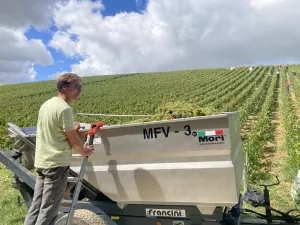
He picks his grapes by hand and is organically-certified, making his own organic composts. These two facts might not seem noteworthy, but in this part of France, both are extremely unusual, and worth a few words of explanation. Machine harvesting counts for 90% of all the vines in Chablis. I do allow that machines are much improved in recent years. They also allow speed harvesting, which can be crucial when the weather turns and berries are fragile. But grapes are brought to the winery in the best conditions when carefully harvested by hand. Then they can also be whole-bunch-pressed. It is no surprise that the ‘reference’ names in Chablis all harvest by hand.
Organic viticulture becomes more challenging in northerly climates, and we have the example of 2024 fresh in mind. Mildew problems hit hard the whole of Burgundy, including Chablis in 2024. But the concept of a living soil is crucial and, whether certified or not, these are the small but crucial differences which allow a wine to stand out. There are only 38 growers certified organic in Chablis – around 7% of the total.
Tommy is at the beginning of his career as a Chablis producer. In 2024 he made wines for the first time in his newly constructed cellar, producing a grand total of only 12,000 bottles. That’s a yield of 12 hectolitres/hectare due to the mildew that ravaged Burgundy in 2024. Quantities will be better when we come to the 2025 harvest, but, even in 2025, Tommy has produced only just over half the allowed maximum for the appellation. Until a recent new plantation comes into production, there is no 1er Cru. Nor this year is there any Petit Chablis or Bourgogne Blanc. These will follow with 2025 vintage.
THE WINES:
For Tommy it’s ‘tension’, ‘acidity’ and ‘terroir specificity’ that he is after. He uses a little sulphur, but no other additives. In general, the style of 2024 brings a welcome return to the days when Chablis was lean and taut, but for palates more familiar with the riper style from recent warm vintages, some of the 2024s can look a bit sour and tart. Tommy uses varying proportions of stainless steel, concrete and oak (only 10%) for his ‘élevage’ which brings a little micro-oxidation and, I feel, loosens the wines up just enough.
We have two comparable wines to offer: In both cases the vinification took place mostly in cement tanks, with 10% aged in 5-year-old barriques. After ‘assemblage’ the wines rested in stainless steel for 4 months before November bottling. Vines in both wines are 35 years old. Both wines were very lightly chaptalised in 2024, and have an alcohol level of just 12%
Chablis ‘Sur la Foret’ 2024, 12%
This is a blend from two parcels in Courgis and Beine. The Beine parcel, just to the west of Chablis, lies high up at 260m – above the Vau Ligneau Premier Cru, with a South West exposure. Topsoil is minimal, rock lies just under the surface. The Courgis parcel is a bit lower, on a coarse marl soil.
This has a bright, fresh and taut nose. We say steely for Chablis, and this does smell like a cutlery drawer. In the mouth there is a faint hint of lactic creaminess, and there is some richness, complexity and weight for such a vibrant wine.
Chablis ‘Rosette’ 2024, 12%
This grows lower down, at 220m, on a much deeper heavier clay soil over a Kimmeridgian base rock, just at the bottom of Premier Cru Beauregards. There is less sunlight here, so the wine has a little less alcohol. The vines here too are 35 years old but actually feels a bit richer and mouth-filling. This is a new parcel for Tommy. It’s farmed identically to the Chablis above but not yet certified organic.